

Cataract Surgery
Cataract surgery removes the cloudy natural lens of the eye and replaces it with a clear artificial lens called an intraocular lens (IOL). It is used when a cataract begins to interfere with everyday activities such as reading, driving, working, or seeing clearly.
Understanding what cataracts are, when surgery may be appropriate, and what recovery involves can help you make informed decisions about your eye health.
To read more about “What is Cataracts, its causes, symptoms, and impact” please click here.
Before Cataract Surgery
If surgery is recommended, your eye doctor will perform a preoperative evaluation and take measurements needed to plan the procedure.
Eye Measurements
Measurements of the eye are used to help calculate the focusing power of the intraocular lens that will replace the natural lens.
Review of Medications and Health
Tell your eye-care team about all medications, supplements, medical conditions, allergies, and previous eye surgeries.
Do not stop prescription medications on your own. Your surgical team will tell you if any medication needs to be adjusted before surgery.
Discussing Your Intraocular Lens
Before surgery, you will discuss the available intraocular lens options with your eye doctor.
Different lenses have different optical characteristics and may be better suited to different patients. Your existing prescription, eye health, lifestyle, and visual priorities can all influence the decision.
There is no single lens that is ideal for every patient.
Questions to Ask Before Surgery
It may be helpful to ask:
- What is causing my current vision problems?
- How much of my vision loss is due to the cataract?
- Is surgery recommended now, or is observation reasonable?
- What type of intraocular lens is appropriate for my eyes?
- Will I still need glasses after surgery?
- What are the risks specific to my eye?
- What medications or preparations do I need before surgery?
- What should I expect during recovery?
- When can I return to driving, work, exercise, and other normal activities?
What Happens During Cataract Surgery?
Cataract surgery involves removing the cloudy natural lens and replacing it with an artificial intraocular lens.
The most common modern approach uses a technique called phacoemulsification. During this procedure, the surgeon makes a small opening in the eye, breaks the cloudy lens into smaller pieces, removes the lens material, and places the artificial lens inside the remaining lens capsule.
Cataract surgery is generally performed as an outpatient procedure.
The eye is usually numbed with anesthetic drops or medication around the eye. Patients are generally awake during the operation, although medication may be provided to help them remain relaxed.
You may notice lights, movement, or pressure during the procedure, but you generally will not see the surgical instruments working on your eye.
The procedure itself is often completed relatively quickly, although the total time spent at the surgical facility can be longer because of preparation and recovery.
The exact technique and anesthesia plan depend on the patient’s circumstances and the surgeon’s assessment.


Intraocular Lenses: The Lens Used to Replace the Cataract
The natural lens removed during cataract surgery is replaced with an artificial lens called an intraocular lens, or IOL.
The IOL is designed to remain inside the eye and provide focusing power after the natural lens has been removed.
There are different types of IOLs, and the most appropriate option depends on factors such as:
- The health and structure of your eyes
- Your existing glasses prescription
- Your visual needs
- Whether you have other eye conditions
- Your preferences regarding glasses after surgery
Some patients may still need glasses after cataract surgery, particularly for certain activities.
Your eye doctor can explain the available choices and their potential advantages and limitations for your individual situation.
Immediately After Cataract Surgery
After surgery, your eye may feel different for a short period while it begins to heal.
Temporary symptoms can include:
- Mild irritation or discomfort
- Itching
- Sensitivity to light
- Blurry vision
- Increased tearing
- A sensation that something is in the eye
Vision can be blurry immediately after surgery and may take time to stabilize.
You will receive instructions about caring for your eye and using prescribed medications or eye drops. You may also be advised to use an eye shield or other form of eye protection.
You should arrange transportation home because you should not drive yourself immediately after surgery.

Recovery and Risks
Recovery varies between patients. Many people notice improvement in their vision relatively soon, but the eye continues to heal after the initial improvement.
During recovery, it is important to follow the instructions provided by your surgical team.
Cataract Surgery Recovery and Healing
Depending on your individual circumstances, you may be asked to:
- Use prescribed eye drops as directed
- Avoid rubbing or pressing on the eye
- Protect the eye while it heals
- Avoid certain strenuous activities temporarily
- Attend scheduled follow-up examinations
- Avoid swimming or other activities when specifically instructed
- Wait until your vision is adequate and your doctor says it is safe before driving
Your doctor will tell you when you can safely return to specific activities.
If you have cataracts in both eyes, surgery may be performed on the eyes at separate times so that the first eye can heal before the second procedure.
Risks and Possible Complications
Cataract surgery is a commonly performed procedure, but no surgery is completely free of risk.
Possible complications include:
- Infection
- Bleeding
- Inflammation
- Changes in eye pressure
- Swelling of the cornea
- Retinal problems, including retinal detachment
- Swelling in the central retina
- Problems involving the position or stability of the intraocular lens
- Persistent or unexpected changes in vision
- Posterior capsule opacification
Some complications are uncommon but can be serious. The risk can also vary depending on the health and anatomy of the eye and whether other eye conditions are present.
For example, people with conditions affecting the retina, optic nerve, cornea, or other parts of the eye may have additional considerations when cataract surgery is planned.
Your ophthalmologist should discuss the risks and expected benefits of surgery based on your individual eyes.
What Is Posterior Capsule Opacification?
Some patients develop clouding of the capsule behind the artificial lens after cataract surgery. This is called posterior capsule opacification (PCO).
PCO can cause vision to become cloudy again after initially improving following surgery. Despite sometimes being called a “secondary cataract,” it is not a new cataract growing on the artificial lens.
If PCO significantly affects vision, it can generally be treated with a laser procedure called YAG laser capsulotomy. This is different from having cataract surgery again.
PCO can develop weeks, months, or even years after cataract surgery.
Warning Signs After Cataract Surgery
Contact your eye-care provider promptly if you experience symptoms that are significantly different from what you were told to expect during recovery.
Seek urgent medical attention if you develop:
- Sudden or significant loss of vision
- Severe or worsening eye pain
- Increasing redness of the eye
- A sudden increase in floaters
- Flashes of light
- A dark curtain or shadow moving across your vision
- Significant or rapidly worsening vision changes
- Other sudden symptoms that concern you
These symptoms can sometimes indicate complications that require prompt treatment.
Do not wait for a scheduled follow-up appointment if you are experiencing a significant or sudden change in your vision.
Post-Treatment Care
Successful recovery depends not only on the procedure itself but also on appropriate follow-up care.
Follow the medication and eye-care instructions provided by your surgical team. Use prescribed eye drops exactly as directed and avoid touching the eye unnecessarily.
Keep all recommended follow-up appointments. These visits allow your doctor to monitor healing, check your eye pressure and vision when appropriate, and identify potential complications.
Protect your eye from accidental injury and follow your doctor’s instructions regarding exercise, lifting, swimming, driving, and other activities.
If your recovery does not seem to be progressing as expected, contact your eye-care provider rather than trying to diagnose the problem yourself.
Who May Need Cataract Surgery?
Cataract surgery may be considered for people who have a cataract that is interfering with useful vision or everyday activities.
You may benefit from an evaluation if you:
- Have been diagnosed with a cataract
- Notice increasingly cloudy or blurry vision
- Have difficulty seeing at night
- Experience significant glare or halos
- Are frequently changing your glasses prescription
- Have difficulty reading or performing detailed tasks
- Find that reduced vision is affecting your independence or daily activities
- Have another eye condition that may require the cataract to be addressed
Age alone does not determine whether someone needs cataract surgery. The condition of the eye and the effect of the cataract on the person’s vision and daily life are important factors.
Not sure whether your vision problems may be caused by a cataract? Learn about cataract symptoms, causes, diagnosis, and treatment.
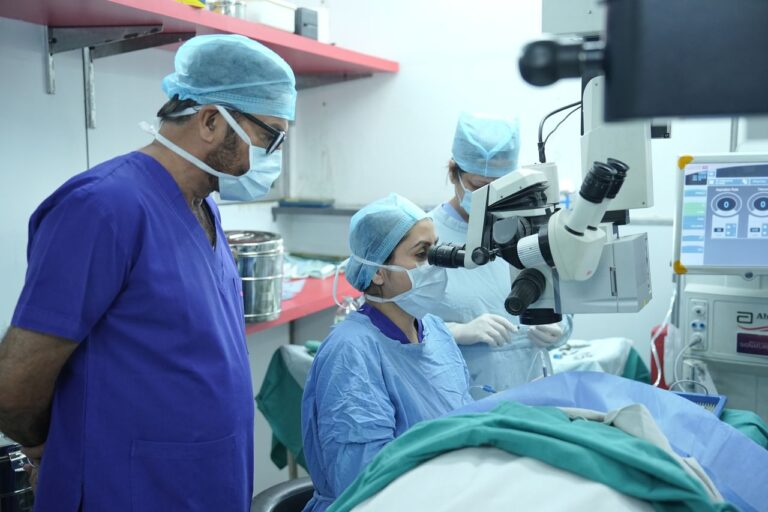

Why Professional Eye Care Matters
Blurred vision, glare, difficulty seeing at night, and other visual changes can have many different causes. A cataract may be responsible, but it is important not to assume that every change in vision is caused by a cataract.
A comprehensive eye examination can help determine whether a cataract is present, how much it is affecting vision, and whether another eye condition may also be contributing to your symptoms.
If surgery is being considered, an individualized evaluation can help determine whether the potential benefits outweigh the risks and which treatment approach is appropriate for your eyes.
Read more about what to expect in Comprehensive Eye Exams.
Medical Disclaimer
The information on this page is provided for general educational purposes and is not a substitute for a professional eye examination, diagnosis, or individualized medical advice. Cataract treatment and surgical decisions depend on each patient’s eye health, medical history, visual needs, and other individual factors. If you have sudden or significant changes in vision, severe eye pain, or other concerning symptoms, seek prompt medical attention.

Ready to See the World More Clearly?
Schedule your comprehensive eye exam with Hillside Ophthalmology today and experience expert care tailored to your needs.