

What Is a Cataract?
A cataract is a clouding of the natural lens inside your eye. The lens normally helps focus light onto the retina, allowing you to see a clear image.
As a cataract develops, the lens becomes less transparent. This can make vision appear cloudy, blurry, dim, or less colorful. Cataracts usually develop gradually and are most commonly associated with aging, although they can also develop for other reasons.
A cataract may affect one eye or both eyes. It does not spread from one eye to the other.
Cataracts can develop in different parts of the lens, and the location and severity of the clouding can influence the type of vision problems a person experiences.
Causes and Impact of Cataracts
Why Do Cataracts Matter?
A mild cataract may have little effect on vision at first. As the clouding progresses, however, it can begin to interfere with everyday activities.
People with cataracts may find it harder to:
- Read comfortably
- Drive, particularly at night
- Recognize faces
- See clearly in bright sunlight or glare
- Work or perform detailed tasks
- Watch television
- Navigate unfamiliar environments safely
Cataracts do not necessarily require immediate surgery simply because they have been diagnosed. In many cases, the decision to operate is based on how much the cataract is affecting a person’s vision and quality of life.
For some people, an updated glasses prescription, improved lighting, or other adjustments may be helpful while a cataract is still mild. When these measures are no longer enough to provide useful vision, cataract surgery may become an appropriate option.
Causes and Risk Factors for Cataracts
Aging is the most common cause of cataracts. Over time, changes in the proteins and fibers that make up the natural lens can cause it to become cloudy.
Other factors may increase the likelihood of developing cataracts, including:
- Age: Cataracts become more common as people get older.
- Diabetes: Diabetes is associated with an increased risk of cataract development.
- Previous eye injury: Trauma to the eye can damage the lens and contribute to cataract formation.
- Previous eye surgery: Certain previous eye procedures may increase the risk.
- Long-term corticosteroid use: Prolonged use of steroid medicines can increase cataract risk.
- Family history: Having close relatives with cataracts may increase susceptibility.
- Smoking: Tobacco use is associated with a higher risk of cataracts.
- Long-term sunlight exposure: Ultraviolet exposure can contribute to cataract development.
- Certain medical conditions: Some systemic or inherited conditions can be associated with cataracts.
Having one or more risk factors does not mean that a person will necessarily develop a cataract. Cataracts can also occur in people without obvious risk factors.
Signs and Symptoms of Cataracts
Cataracts often develop slowly, so early changes may be subtle. Some people may not notice a significant problem until the cataract becomes more advanced.
Common symptoms include:
- Cloudy or blurry vision
- Dimmer vision
- Difficulty seeing at night
- Increased sensitivity to bright lights or glare
- Halos or starbursts around lights
- Difficulty reading without brighter lighting
- Colors appearing faded, yellow, or less vivid
- Frequent changes in glasses prescription
- Double vision in one eye
Symptoms can vary depending on the type, location, and severity of the cataract.
A change in vision should not automatically be assumed to be caused by a cataract. Other eye conditions can produce similar symptoms, which is why a comprehensive eye examination is important.
When Should You See an Eye Doctor?
Arrange an eye examination if you notice a gradual change in your vision, increasing difficulty reading, worsening night vision, or increasing glare.
You should seek prompt medical attention for sudden changes in vision rather than assuming they are caused by a cataract.
Sudden vision loss, sudden flashes of light, a sudden increase in floaters, severe eye pain, or a dark curtain or shadow across your vision can indicate other eye problems that require urgent evaluation.
Cataracts generally develop gradually. Sudden vision changes should therefore be assessed rather than attributed to a cataract without an examination.
How Are Cataracts Diagnosed?
Cataracts are usually diagnosed during a comprehensive eye examination. Your eye doctor will assess your vision and examine the structures of your eyes to determine whether a cataract is present and whether it is contributing to your visual symptoms.
Your examination may include:
Medical and Eye History
Your doctor may ask about changes in your vision, previous eye conditions or surgeries, medical conditions, medications, and how your vision affects your daily activities.
This information helps put your symptoms and examination findings into context.
Visual Acuity Testing
You will be asked to read letters or symbols from a standardized chart. This measures how clearly you can see at different distances.
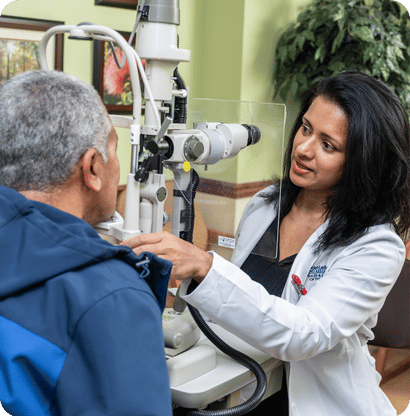
Slit-Lamp Examination
A slit lamp is a specialized microscope that allows the eye doctor to examine the front structures of the eye in detail, including the cornea, iris, and natural lens.
This can help identify and assess cataract changes.
Dilated Eye Examination
Eye drops may be used to enlarge the pupil so the doctor can examine the lens, retina, optic nerve, and other structures deeper inside the eye.
This is important because reduced vision may have more than one cause. Identifying other eye conditions can help determine how much of the visual problem is likely to be related to the cataract.
Additional Measurements Before Surgery
If cataract surgery is being considered, additional measurements of the eye may be performed to help determine the appropriate focusing power of the replacement lens.
The exact tests used depend on the individual patient’s eyes and surgical needs.

When Is Cataract Surgery Recommended?
Cataract surgery is generally considered when a cataract causes enough vision impairment to interfere with activities that are important to you.
This may include difficulty with:
- Reading
- Driving
- Working
- Watching television
- Managing household activities
- Recognizing faces
- Maintaining independence
- Performing hobbies or other activities that require clear vision
There is usually no requirement to remove a cataract simply because one has been diagnosed. Your eye doctor can discuss the potential benefits and risks of surgery and help determine whether the time is right.
In some situations, surgery may also be considered when the cataract makes it difficult for an eye doctor to examine, monitor, or treat another condition inside the eye.
The decision should be individualized based on your vision, symptoms, eye health, general health, and personal needs.
To read about the complete Cataract Surgery procedure and post-op care please click here.
Before Cataract Surgery
If surgery is recommended, your eye doctor will perform a preoperative evaluation and take measurements needed to plan the procedure.
Eye Measurements
Measurements of the eye are used to help calculate the focusing power of the intraocular lens that will replace the natural lens.
Review of Medications and Health
Tell your eye-care team about all medications, supplements, medical conditions, allergies, and previous eye surgeries.
Do not stop prescription medications on your own. Your surgical team will tell you if any medication needs to be adjusted before surgery.
Discussing Your Intraocular Lens
Before surgery, you will discuss the available intraocular lens options with your eye doctor.
Different lenses have different optical characteristics and may be better suited to different patients. Your existing prescription, eye health, lifestyle, and visual priorities can all influence the decision.
There is no single lens that is ideal for every patient.
Questions to Ask Before Surgery
It may be helpful to ask:
- What is causing my current vision problems?
- How much of my vision loss is due to the cataract?
- Is surgery recommended now, or is observation reasonable?
- What type of intraocular lens is appropriate for my eyes?
- Will I still need glasses after surgery?
- What are the risks specific to my eye?
- What medications or preparations do I need before surgery?
- What should I expect during recovery?
- When can I return to driving, work, exercise, and other normal activities?
Living With Cataracts Before Surgery
If a cataract is present but surgery is not yet necessary, some practical changes may make daily activities easier.
You may benefit from:
- Keeping your glasses prescription up to date
- Using brighter lighting for reading
- Reducing glare when possible
- Wearing sunglasses outdoors
- Using magnification for detailed tasks when needed
- Taking additional care with activities affected by reduced vision
- Limiting or avoiding night driving if your vision makes it unsafe
These measures do not remove the cataract. They are simply ways of adapting to vision changes while monitoring the condition.
If cataract-related vision loss begins to interfere with important activities, discuss your options with an eye-care professional.
If your cataract is beginning to interfere with your daily activities, cataract surgery may be an option. Learn more about what happens before, during, and after the procedure in our Cataract Surgery Guide.

Protecting Your Long-Term Eye Health
There is no guaranteed way to prevent every cataract. However, several habits may help reduce risk or support overall eye health.
These include:
- Protecting your eyes from excessive ultraviolet exposure with appropriate sunglasses
- Avoiding smoking
- Managing medical conditions such as diabetes
- Maintaining a generally healthy lifestyle
- Having regular eye examinations
- Reporting significant changes in vision to an eye-care professional
Regular examinations are particularly important because reduced vision may have causes other than cataracts.
Frequently Asked Questions About Cataract Surgery
Is cataract surgery the only way to remove a cataract?
Yes. Glasses, improved lighting, and other adjustments may help manage vision problems caused by an early cataract, but they do not remove the cataract. Surgery is the definitive treatment for removing the cloudy natural lens.
Does every cataract require surgery?
No. A cataract does not necessarily need to be removed as soon as it is diagnosed. Surgery is generally considered when the cataract begins to interfere significantly with vision or daily activities, although individual circumstances can differ.
Is cataract surgery painful?
The eye is numbed during surgery, and most patients do not experience significant pain during the procedure. Some irritation, discomfort, sensitivity, or soreness can occur afterward.
Tell your eye-care team if you experience severe or worsening pain after surgery.
How long does cataract surgery take?
The surgical procedure itself is generally relatively short, although the total time at the surgical facility includes preparation and recovery. The exact duration varies according to the individual procedure and circumstances.
Will I still need glasses after cataract surgery?
Possibly. The artificial lens provides focusing power, but some patients still need glasses for certain distances or activities after surgery. Your postoperative prescription and visual needs will determine whether glasses are necessary.
When can I drive after cataract surgery?
Do not drive until your vision has recovered sufficiently and your eye doctor has confirmed that it is safe to do so. The timing varies from person to person.
How long does it take to recover?
Many people experience noticeable improvement relatively quickly, but the eye continues to heal after surgery. Your doctor will monitor your recovery and advise you when it is appropriate to resume particular activities.
Can a cataract come back after surgery?
The cataract itself does not grow back because the cloudy natural lens has been removed. However, some patients later develop clouding of the capsule behind the artificial lens, known as posterior capsule opacification. This can usually be treated with a laser procedure.
What happens if I wait to have cataract surgery?
For many people, cataract surgery does not need to be performed immediately. Your doctor may recommend monitoring the cataract if your vision remains adequate for your daily activities. However, cataracts can progress, and the appropriate timing depends on your individual circumstances.
What should I expect at a cataract evaluation?
Your appointment may include a review of your symptoms and medical history, vision testing, examination of the eye, and possibly pupil dilation. If surgery is being considered, additional measurements may be performed to help plan the procedure and select an appropriate intraocular lens.
Why Professional Eye Care Matters
Blurred vision, glare, difficulty seeing at night, and other visual changes can have many different causes. A cataract may be responsible, but it is important not to assume that every change in vision is caused by a cataract.
A comprehensive eye examination can help determine whether a cataract is present, how much it is affecting vision, and whether another eye condition may also be contributing to your symptoms.
If surgery is being considered, an individualized evaluation can help determine whether the potential benefits outweigh the risks and which treatment approach is appropriate for your eyes.

Medical Disclaimer
The information on this page is provided for general educational purposes and is not a substitute for a professional eye examination, diagnosis, or individualized medical advice. Cataract treatment and surgical decisions depend on each patient’s eye health, medical history, visual needs, and other individual factors. If you have sudden or significant changes in vision, severe eye pain, or other concerning symptoms, seek prompt medical attention.

Ready to See the World More Clearly?
Schedule your comprehensive eye exam with Hillside Ophthalmology today and experience expert care tailored to your needs.